


The impacts of light pollution on the underwater world are poorly understood, but many scientists have been studying the issue for several years. Twenty-two per cent of coastal regions worldwide are affected by this pollution, which impacts the survival, growth and reproduction of many marine organisms.
By Marion Durand.
When asked, ‘What do we know about the impact of light pollution on marine organisms?’, the answer given by the scientists surveyed is often the same: ‘We don’t know much.’ But we already know enough to say that this pollution, which affects 22% of coastal regions worldwide, is disrupting many species. Light pollution describes the harmful effects of artificial lighting in an environment that was originally devoid of light. There are two types: ‘direct light pollution, which dazzles us, and indirect, diffuse light pollution, which creates halos of light visible for hundreds of kilometres,’ explains astrophysicist Sébastien Vauclair.
Scientific studies conducted to understand the impact of this pollution mainly concern terrestrial species, but artificial light, by penetrating the water, also affects marine life. It particularly affects species living near the coast, ports, docks, in waterways, around floating hotels and even near ships and offshore platforms.
A study conducted in 2020 by researchers at the University of Plymouth in the United Kingdom revealed that artificial light emitted by coastal cities reaches up to three-quarters of the seabed. A few months earlier, an international team warned, again in the journal Nature, of the impact of this pollution:‘Artificial light during the polar night disrupts the behaviour of Arctic fish and zooplankton at depths of up to 200 metres.’
SURVIVAL AND GROWTH: ENDANGERED SPECIES
At the Centre for Island Research and Environmental Observatory (Criobe) in Moorea, French Polynesia, Suzanne Mills, senior lecturer at the École Pratique des Hautes Études (EPHE-PSL), is interested in all anthropogenic stresses (caused by human activity). Among these, light pollution is disrupting coral reef fish. ‘For more than ten years, clownfish populations have been declining in the lagoon, but we don’t really know why. Light pollution could play an important role.’
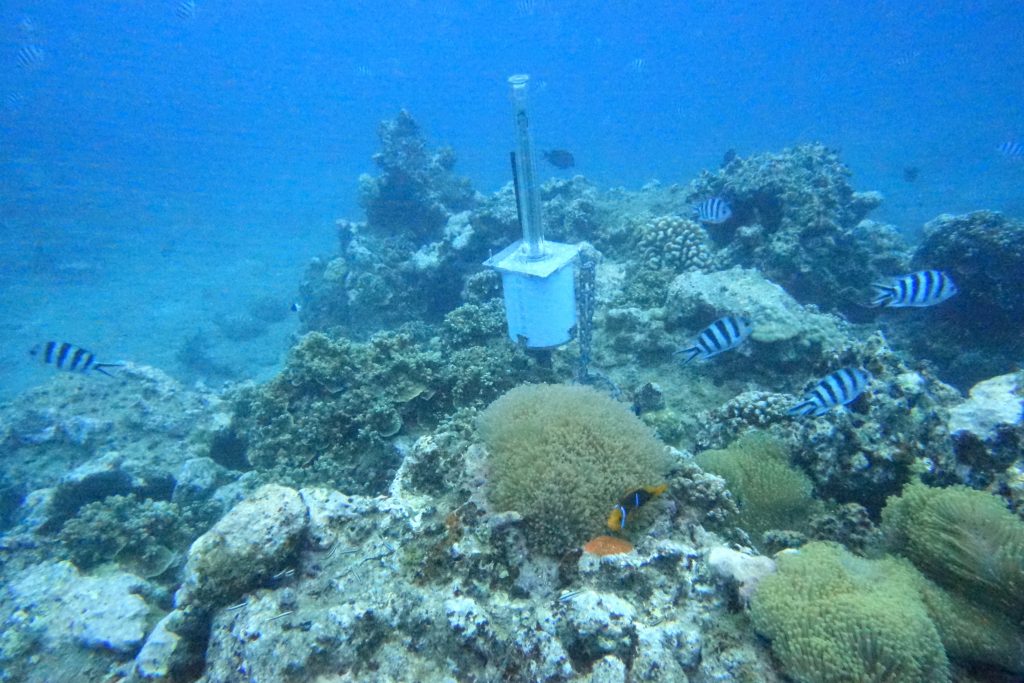
Exposure to light pollution reduces the survival and growth of clownfish. © Jules Schligler
For two years, Suzanne Mills and Jules Schligler, a PhD student in ecophysiology, studied the survival and growth of juvenile clownfish exposed to an artificial light source. They placed spotlights near their habitats, the anemones. The results? Long-term exposure reduced their survival (36% on average) and growth (44%). Another study conducted at Criobe, the results of which are currently being analysed, shows that light pollution also leads to a decrease in certain sex hormones in these fish: ‘These changes have an impact on their offspring; we discovered that the juveniles were smaller and less productive,’ observes Jules Schligler.
Damien Tran, a CNRS researcher at the Arcachon Marine Station, has shown that light pollution also influences the growth of Pacific oysters. ‘In the laboratory, we observed a 32% decrease in the animal’s growth when the oyster was exposed to an artificial light source for one month.’ The biologist is conducting the experiment (starting at the end of September) in real conditions on Île aux Oiseaux in the Arcachon basin. As part of the Luciole project (Light pollution impacts on organisms living in coastal environments), he will subject the molluscs to chronic light pollution. ‘If we see a 30% decline in growth, this information will be invaluable to oyster farmers, who deliberately light their basins to combat theft. Oysters are a key organism in coastal ecosystems, and their survival is essential.’
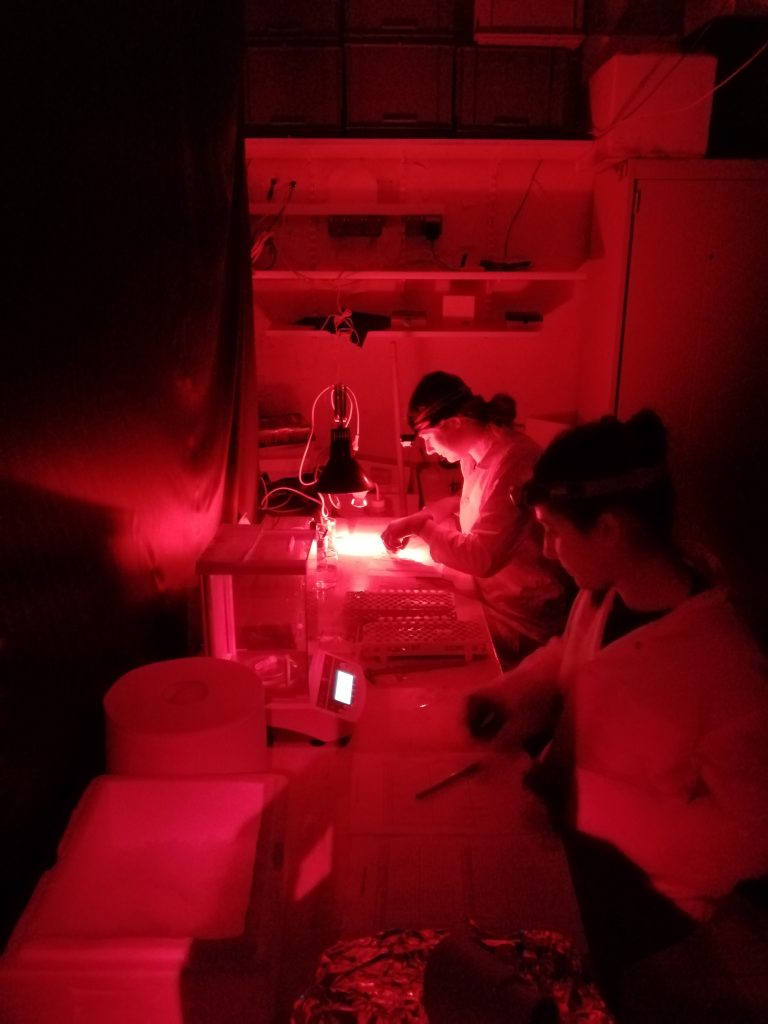
Before conducting the Luciole project in the Arcachon basin, researcher Damien Tran studied the impact of light pollution on Pacific oysters in the laboratory. © Damien Tran
SPAWNING THREATENED BY LIGHT POLLUTION
Whether it’s corals, turtles or frogs, scientific studies show that light pollution has a detrimental impact on egg-laying and reproduction.
A 2019 study by Jessica Hua on frogs showed that artificial light reduces the hatching success of tadpoles and makes amphibians ‘more vulnerable’. Sea turtles are also among the species most affected by light pollution, as most of them lay their eggs at night. After burying their eggs, the females return to the water, heading towards the brightest horizon, which in natural conditions is the sea. Light is also the main clue used by juveniles to locate the ocean. “The presence of artificial light on beaches disorients individuals, who are drawn to these new, more intense sources of light. Turtles then risk getting lost, being hit by a vehicle, dying of dehydration, or, in the case of juveniles, becoming easy prey for predators,” describes a report by the Groupe Tortues Marines France.
For most living beings, the cycle of day and night is a structuring element. For corals, the lunar cycle and the position of the sun play a major role in the synchronisation of spawning. ‘The brightness emitted on the night of the full moon determines the right time for reproduction. In addition to determining temporal factors, low night-time brightness also reduces the effect of predation and therefore improves fertilisation,’ explains the Coral Guardian association. Does light pollution disrupt this synchronisation phenomenon? ‘Obviously,’ says Christine Ferrier-Pagès, research director and marine biology specialist at the Monaco Scientific Centre. Male gametes may be released too early or corals may spawn randomly. There may also not be enough gametes for optimal fertilisation. ‘
Light pollution also disrupts photosynthesis in algae living in symbiosis with corals. The latter ’lose their symbiotic algae, a process known as bleaching. The severity of bleaching depends on the intensity of oxidative stress experienced by the corals,” explains the head of the coral ecophysiology team.
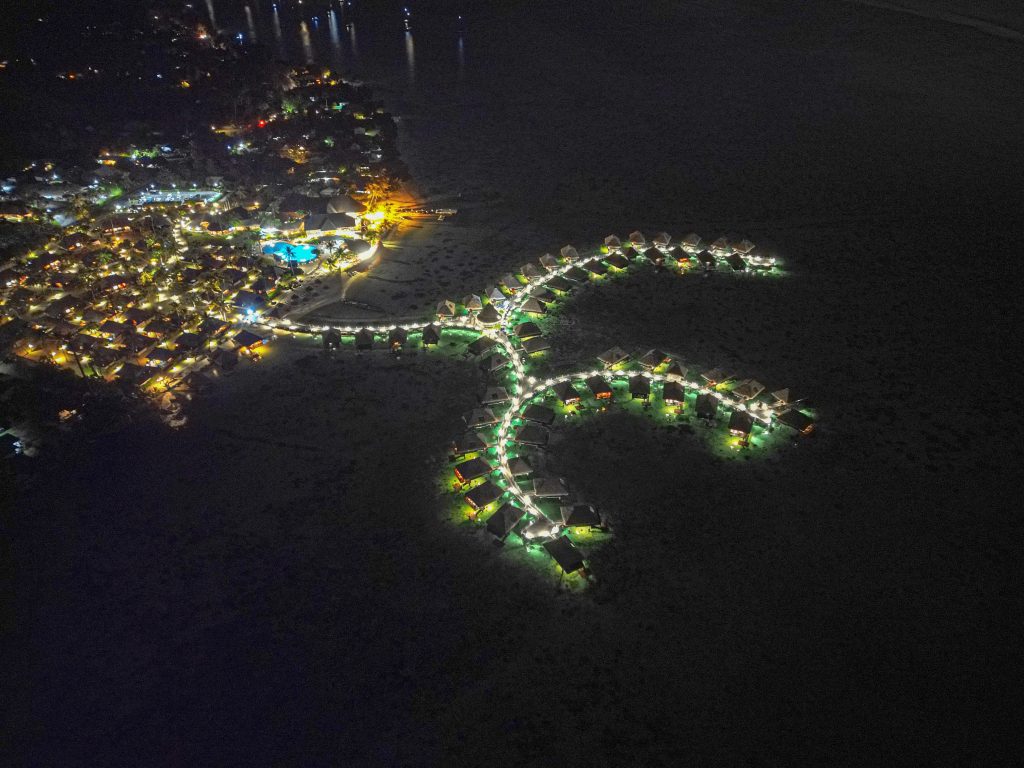
Two researchers from Criobe, Jules Schilgler and Thibaut Roost, are studying the impact of light pollution emitted by overwater hotels and bungalows on the lagoon in Polynesia. © Jules Schligler
AN ENTIRE DISTURBED ECOSYSTEM
Light pollution is not a phenomenon to be taken lightly, according to Jack Falcon, emeritus researcher at the CNRS and administrator of the National Association for the Protection of the Night Sky and Environment (ANPCEN): “A large majority of the aquatic marine environment is affected. We see the same phenomenon in the water as we do on land. If one element is disturbed, the entire ecosystem suffers! Studies show that populations are being reorganised because the balance between species is being disrupted by lighting. This in turn disrupts the entire food chain.”
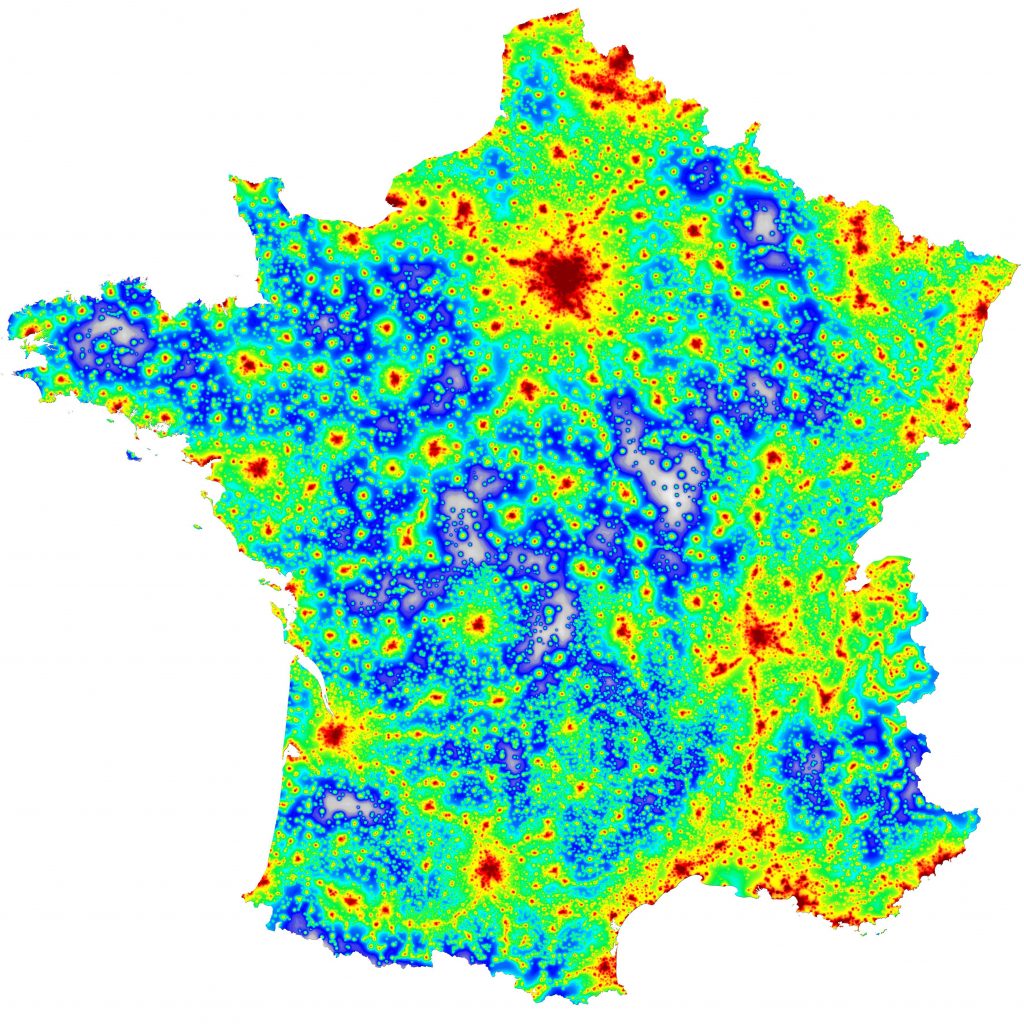
Light pollution (shown in red on the map) is more significant in large cities and coastal areas. © Sébastien Vauclair – Dark Sky LabCould species disappear because of light pollution? ‘The causes are often multifactorial. Light contributes significantly and is one of a number of factors affecting living beings: rising temperatures, fishing, pollution, ocean acidity, etc.,’ warns Jack Falcon. The consequences of the interaction between these many stresses are poorly understood. ‘Little is known about the combined effects,’ worries Christine Ferrier-Pagès. ‘Corals will not respond in the same way to climate change if they are not subjected to any other stress or, conversely, if they are weakened by other types of pollution such as light.’
Despite measures limiting public lighting at night in certain municipalities, light pollution continues to increase (2.2% per year between 2012 and 2016). However, ‘it is one of the easiest types of pollution to eliminate,’ says Jules Schligler. ‘The solutions are simple to implement, so we could easily solve the problem!’