

A new study provides the first-ever measurements of melatonin in wild sharks and shows that artificial light from large coastal cities can disrupt the nocturnal biology of sharks, with nurse sharks being more affected than highly mobile blacktip sharks.
Source : Diana Udel / Miami University
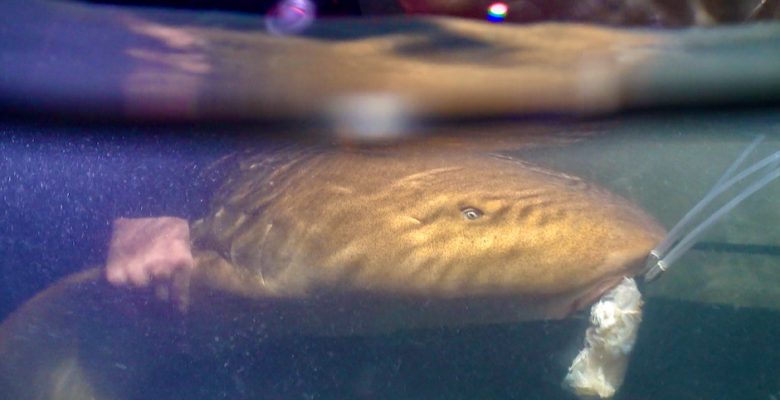
Cover photo: Scientists from the University of Miami’s shark research and conservation programme prepare to take samples from a nurse shark caught off the coast of Miami during the night. @sharktagging.com
A new study, published in Science of the Total Environment, reveals that sharks living in brightly lit coastal waters near large urban areas have different night-time melatonin levels than sharks living in darker, less developed environments. The findings reveal that artificial night-time light can influence marine predators and have broader implications for ocean ecosystems.
A form of pollution that is often overlooked
Artificial light at night, or ALAN, is one of the most widespread environmental effects of urbanisation. While previous studies have shown that ALAN can suppress melatonin in bony fish, its effects on sharks and other elasmobranchs had not been examined until now.
To fill this gap, researchers from the Shark Research and Conservation Program at the Rosenstiel School of Marine, Atmospheric and Earth Science at the University of Miami conducted night-time fieldwork off Miami, Florida, one of the most brightly lit coastal metropolitan areas in the United States, and compared sharks sampled from urban waters with those from nearby, darker coastal areas.
The team studied two species of sharks with contrasting movement patterns: nurse sharks, which are relatively less mobile and tend to remain in the same areas for long periods of time, and blacktip sharks, which are highly mobile and regularly move across large coastal areas.
The results showed a species-specific response. Nurse sharks exposed to higher levels of artificial light at night had significantly lower melatonin concentrations than nurse sharks sampled from darker environments. In contrast, melatonin levels in blacktip sharks did not differ between brightly lit and darker areas.
‘These results suggest that exposure to artificial light at night may reduce melatonin levels in wild sharks, but their vulnerability depends on their behaviour,’ said Abigail Tinari, lead author of the study, who conducted this research as part of her master’s thesis at the Rosenstiel School. ‘Species that live primarily in light-polluted areas appear to be more sensitive than those that regularly move between lit and darker habitats.’
Cascading effects throughout the food chain
Melatonin plays an important role in regulating daily biological rhythms and is linked to overall health and physiological functioning in many animals. Disruptions to this hormone have been linked to sleep and metabolic disorders in humans and land animals, but its role in sharks remains largely unexplored.
“The first sharks began roaming Earth’s oceans more than 400 million years ago. The fact that this study suggests sharks may respond like humans underscores the fundamental importance of this process, as it is highly conserved throughout evolution,” said Danielle McDonald, co-author of the study, professor in the Department of Marine Biology and Ecology, and director of the Glassell Family Centre for Marine Biomedicine at the Rosenstiel School.
‘This also reinforces concerns among physicians about LED lighting, screens and urban light pollution as contributing factors to chronic diseases and conditions,’ McDonald said. “In addition, researchers may now look at other aspects of melatonin physiology in sharks to investigate whether there are differences in their melatonin receptors that could inform new therapies or targets for drug development to treat melatonin-related disorders. ”
This study represents the first ever reported assessment of blood melatonin levels in sharks, establishing baseline values for nurse sharks and blacktip sharks. These baseline data provide an essential foundation for future monitoring and for comparing how different shark species respond to increasing coastal development.
The researchers conducted this study over approximately one year, capturing sharks at night using short-duration search lines designed to minimise stress. Blood samples were taken immediately and analysed to determine melatonin levels. The team also measured environmental variables such as light intensity, water depth and temperature, enabling them to establish a direct link between exposure to urban light and physiological changes. Night-time sampling was carried out using low-impact red lighting so as not to disrupt the sharks’ natural perception of light.
‘Sharks play a key role in maintaining the balance of marine ecosystems, and physiological changes in top predators could have cascading effects throughout the food chain,’ added Neil Hammerschlag, lead author of the study, who contributed to the research while at the Rosenstiel School. ‘Our findings highlight that light pollution is an important environmental stressor that deserves consideration alongside more widely recognised threats such as habitat loss and chemical pollution.’
Funding for this study was provided by The Batchelor Foundation, Inc. and Canon Solutions USA.